THE GIST OF IT
- Money habits start forming by around age 7, so hands-on practice with real money matters more than lectures.
- An allowance works best as a decision-making tool, not a reward for chores.
- Kids ages 10–12 can benefit from savings goals they can see and track digitally.
- Most teens are ready for a real debit card by 13, but Cash App’s Raising Gen Alpha study shows only 29% actually have one.
- You don't need to be a financial expert. Learning alongside your kid is the most effective approach.
Why money habits form earlier than most parents expect
Cash App's Raising Gen Alpha study, conducted by The Harris Poll, found that 25% of parents say their children would be better off learning money management from someone else. That's 1 in 4 parents admitting they don't feel like the right person for the job.
But you don't have to be a financial expert to teach your kid about money. You just have to start early and keep it real.
A widely cited study commissioned by the UK's Money Advice Service found that money habits begin forming by around age 7. By second grade, kids are already absorbing how money works based on what they see you do at the store, what you say about bills, and whether you treat spending as a conversation or a secret.
That's why hands-on experience matters more than lectures. The CFPB's Money as You Grow guidelines organize financial milestones by age and emphasize activities where kids practice real decisions, from counting coins to comparison shopping to managing a paycheck.
So skip the curriculum. The goal at every age is one concrete move: a small, real-money moment where your kid gets to make a choice and see what happens next.
Ages 3–5: Let them see money leave your hands
Before kids can count change, they can understand that paying for something means money goes away. That's the first lesson, and it doesn't require a whiteboard.
Spending awareness starts with visibility. Let your 3-year-old hand the cashier actual bills. Set up a pretend store at home with real coins and price tags. When you pay for groceries, narrate what's happening: "I'm giving the store money because we're taking food home."
At this age, the concept of "needs vs wants" is too abstract to explain but not too abstract to practice. When your kid asks for a toy at the store, you can say, "We came here for shoes. The toy costs money too, and we're choosing shoes today." They won't love it, but they'll start to understand that money is finite.
The one move: Let your child physically hand over money for something. A pack of stickers, a banana at the farmers' market. The item doesn't matter. What matters is that they see money leave their hands and something arrive in return.
Ages 6–9: Start an allowance with a purpose
Most kids in this age range are already getting some money. The same Harris Poll research found that 93% of Gen Alpha kids already receive their own money through allowance, gifts, or chores. So the question is less about access and more about whether they'll learn to make decisions with what they already have.
An allowance works best as a decision tool, not a reward
Give your child a fixed amount each week and let them choose what to do with it. The goal is for them to feel what happens when they spend $5 on candy Tuesday and then don't have $5 for something else they want on Friday.
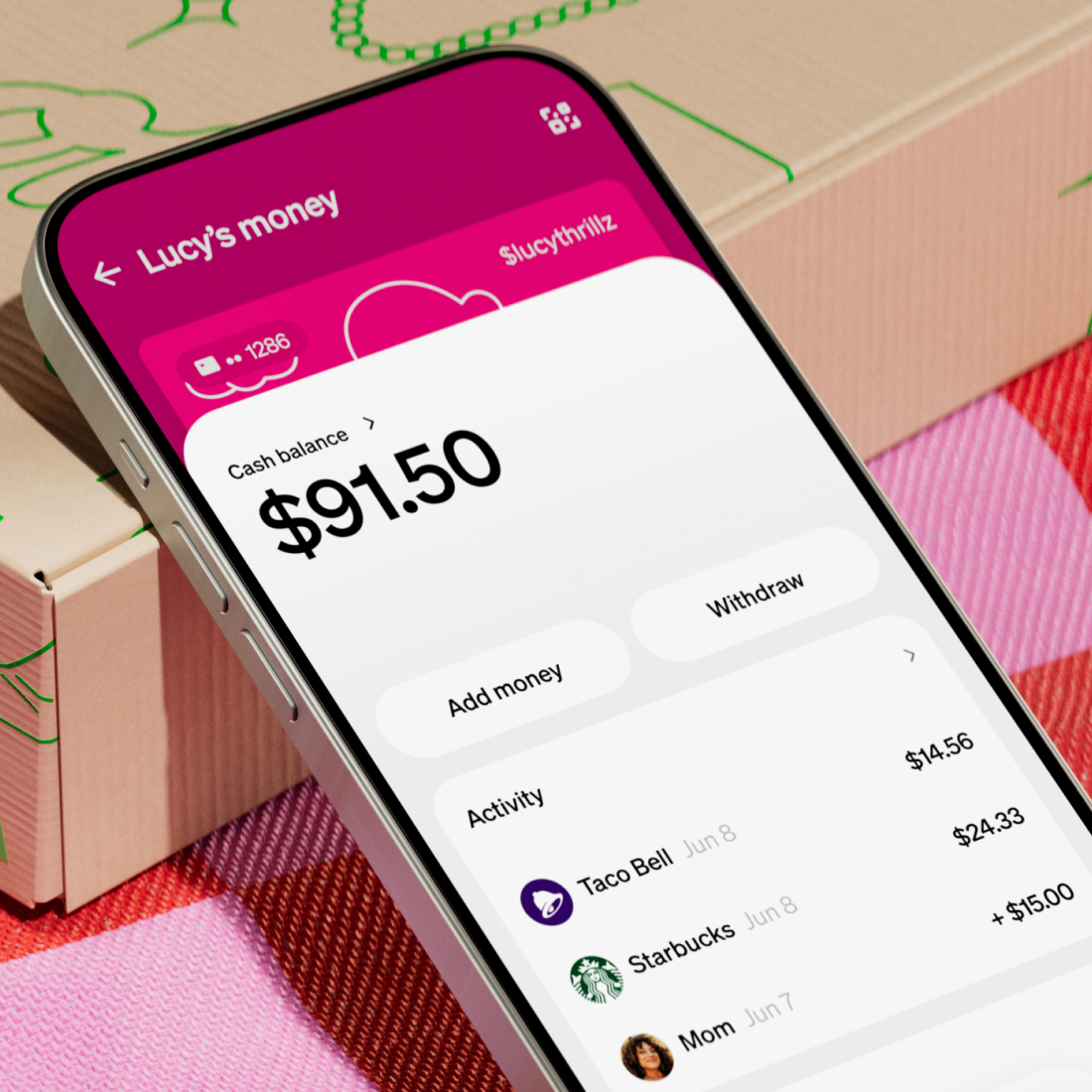
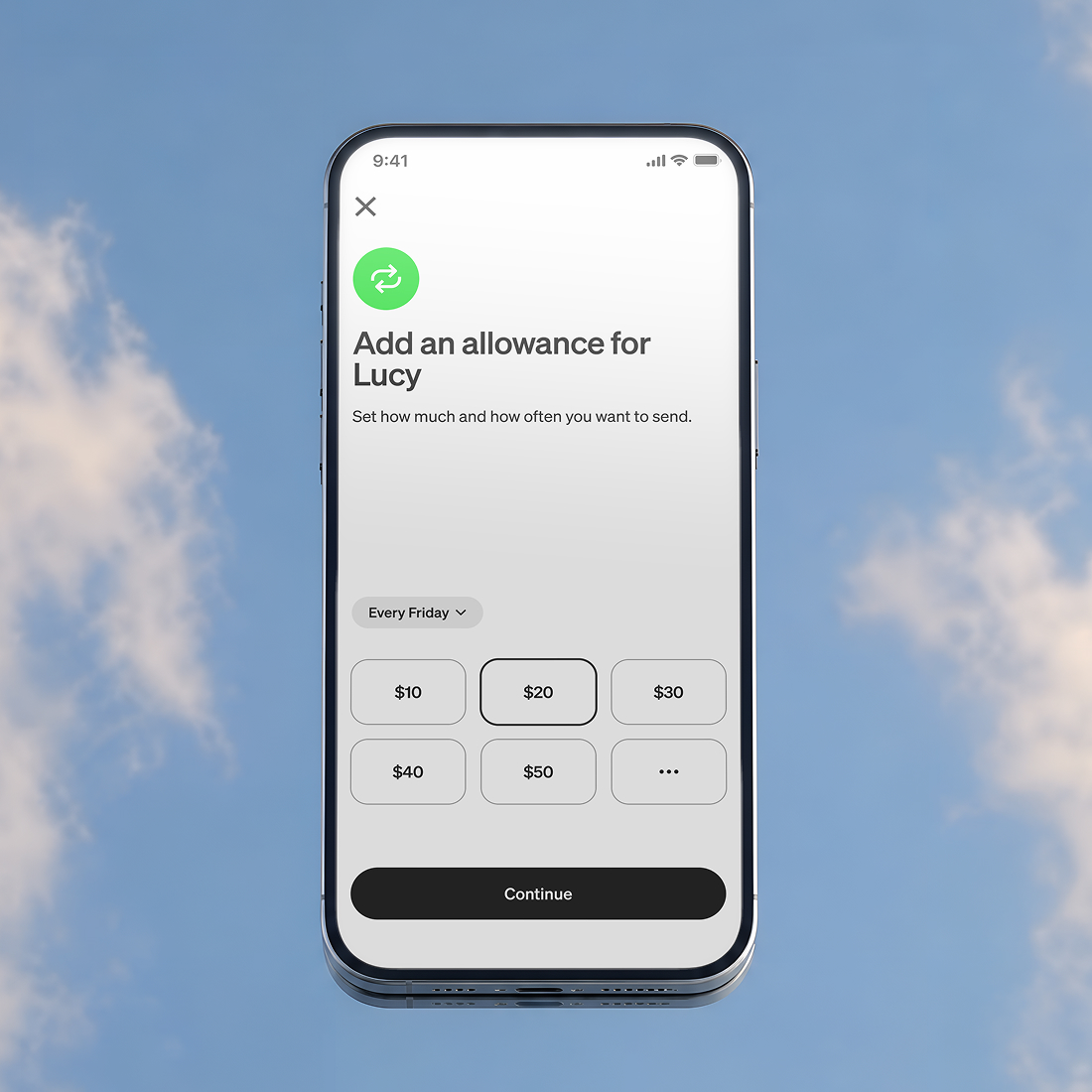
If you're looking for a way to automate this, Cash App managed accounts for kids 6-121 lets you set up recurring allowance transfers so the money shows up consistently without you having to remember every week. Your child can see their balance, track what they're spending, and watch savings grow toward a goal—all in one place.
Delayed gratification can become real around age 8
That's when most kids can meaningfully set a savings goal (a toy that costs more than one week's allowance) and work toward it over several weeks. A jar on the counter or a chart on the fridge makes that progress visible. When kids watch their money growing toward something specific, saving stops being an abstraction and starts feeling like a strategy they chose.
The one move: Start an allowance around age 8, and help your child set a visible savings goal by age 10.
Ages 10–12: Give them a savings goal they can track
By ages 10–12, kids can be ready for a savings goal that takes longer than a few weeks to reach. That's the shift that matters at this age: moving from "I want this toy next week" to "I'm saving for something bigger over the next few months."
A multi-month goal teaches patience in a way short-term saving can't. It also creates a reason to track progress, which is where digital tools start to make sense. Your kid has probably seen you tap a phone to pay for coffee. They know money moves through screens. Setting up savings they can see and interact with—whether that's a savings account with a balance they can check or a tracking tool that shows their progress—makes the goal feel real instead of abstract.
This is also a natural time to introduce the concept of interest, since your child is already watching their savings grow. You don't need to explain compound interest formulas. You can say: "If you put $50 in savings and leave it there, the bank pays you a little extra money for keeping it there. That extra money earns extra money too." The conversation itself builds confidence, and it connects to the goal they're already working toward.
The one move: Set up savings your child can see, and work toward a multi-month savings goal together.
Ages 13–15: Hand over a real account
This is the age where the gap between knowing about money and handling it actually closes.
By 13, most kids are ready for a real account with a real debit card. But the Raising Gen Alpha data shows only 29% of kids in this age range actually have their own debit card. That gap between readiness and access is where a lot of early money lessons stall out.
The landscape of teen financial tools breaks into a few categories
Subscription-based kids apps gamify financial lessons with quizzes and challenges. Teen credit-building apps report to bureaus so teens start a credit history. Custodial accounts let parents invest on a child's behalf. And fee-free accounts with parental controls and interest on savings give teens a spending and saving account they actually manage. Cash App's sponsored accounts for teens ages 13–172 fall in that last category, with parental controls and interest on savings3 through Cash App's partner bank. None of these teaches the lesson for you. The learning happens when your teen uses them and sees real consequences.
If you're wondering whether your kid is ready, here are the signs your teen is ready for a debit card.
Start with guardrails
A spending notification every time they use the card. A weekly balance check-in. A low initial balance so the mistakes are small. Buying lunch for a week instead of spending it all on Monday is a $20 lesson, not a $200 one.
The one move: Get your teen a real debit card by 13. The card itself matters less than what it represents: financial independence they can practice while you're still close enough to help.
Ages 15–17: Let them earn, save, and make real spending mistakes
Once a teenager starts earning, the relationship with money shifts. According to Cash App's research on teen financial access, 58% of US teens report earning money, and 42% do so through digital channels like selling online, freelancing, or getting paid through apps.
A teenager who earns $80 from a weekend job thinks differently about a $30 purchase than a teenager spending allowance money. The mental math ("I worked 4 hours for this") changes spending decisions in a way no lecture can replicate.
Introduce credit concepts before they encounter credit
At 16, your teen doesn't need a credit card. But they do need to know what a credit score is, how it builds over time, and why it matters. Keep it simple: "A credit score is a number that tells lenders whether you pay back money you borrow. You build it by borrowing small amounts and paying them back on time. It takes years to build and can drop fast."
Frame credit as something to understand before they're standing in a car dealership at 19, not something to stress about.
At 16, the goal is financial fluency. Your teen should know how to check a balance, track spending over a week, spot a fee they didn't expect, and understand where their money actually went. Look for tools designed for families that give teens real practice while keeping parents connected to what's happening.
The one move: Help your teen set up real money management tools and start understanding credit by 16, before they're making these decisions without you.
What to do when you don't know the answer yourself
The Raising Gen Alpha research also surfaced a confidence gap: roughly 1 in 5 parents worry about giving their children bad financial advice. Parents who learned about money before age 17 are significantly less likely to say they lack confidence in discussing it with their own kids (11% vs. 20%).
You don't have to be the expert. The most effective financial education doesn't come from parents who have all the answers. It comes from parents who are willing to figure it out alongside their kids. When your teenager asks about investing and you don't know the answer, say so, then look it up together. That models something more valuable than any single lesson: the habit of treating money questions as solvable rather than off-limits.
A simple framework for what to do next
First, pick one age-appropriate money move from this guide and do it this week, not next month. Second, when a money question comes up that you can't answer, treat it as a research project you do together. Third, keep the conversation going. The one-time "money talk" doesn't work. Small, regular conversations about real spending and saving decisions do.
Whatever tools you choose, look for ones that give you visibility into your teen's activity and let them practice with real money in a controlled setting.