THE GIST OF IT
- Every scam runs on three mechanisms: urgency (fake deadlines), authority (impersonating someone you trust), and isolation (discouraging you from checking with anyone else).
- Impersonation, phishing, and investment scams are the most common and highest-dollar fraud categories per the FTC's 2024 data.
- No legitimate company, bank, or government agency will ask for your PIN, password, or sign-in code through a call, text, or email.
- Before responding to any financial message, verify through a separate channel. Look up the number yourself, open the app directly, and talk to someone you trust before sending money.
- If you've been scammed, report to your financial institution and the FTC at reportfraud.ftc.gov right away. Speed matters for recovery.
What makes scams work (and why smart people fall for them)
Every scam, no matter how different it looks on the surface, runs on some combination of three mechanisms. Once you know them, you start noticing them everywhere.
Urgency. Scammers manufacture a deadline. "Your account will be locked in 24 hours." "Act now or lose your spot." The clock is fake, but the pressure is real. Urgency works because it compresses your decision window. You act before you think, and that's the point.
Authority. They impersonate someone you already trust: your bank, the IRS, a company you use every day. The message looks official. The caller ID matches. The email has the right logo. Authority works because you've been trained to respond when these institutions reach out.
Isolation. They discourage you from checking with anyone else. "Don't share this code with anyone, not even a family member." "This is a confidential matter." Isolation works because a second opinion is the single fastest way to unravel a scam, and scammers know it.
Scams don't work because you're careless; they work because they're designed to bypass the exact instincts that usually keep you safe. The person who falls for a well-crafted impersonation text isn't naive. They're responding the way any reasonable person would respond to a message from their bank.
Impersonation scams
Impersonation scams are the most common type of fraud reported to the FTC, and they come in four main forms.
Bank and financial institution impersonators call or text claiming there's a problem with your account. They might say a suspicious transaction was detected and they need to verify your identity. The mechanism is authority plus urgency: they sound like your bank, and they tell you the problem needs to be handled right now.
Government impersonators pose as the IRS, Social Security Administration, or law enforcement. They claim you owe money, your benefits are at risk, or there's a warrant for your arrest. The FTC reported that consumers lost over $917 million to government impersonation scams in 2025.
Tech support scammers trigger fake pop-ups on your screen or cold-call claiming your device has been compromised. They ask for remote access to "fix" the problem, then use that access to steal information or install software that captures your credentials.
Celebrity impersonation, particularly on social media and messaging apps, is when scammers create fake accounts that look like verified profiles of public figures, then use those accounts to promote fake giveaways or investment opportunities. These scams work because the account looks real, the follower count looks high, and the promise of access to someone famous adds a layer of perceived legitimacy.
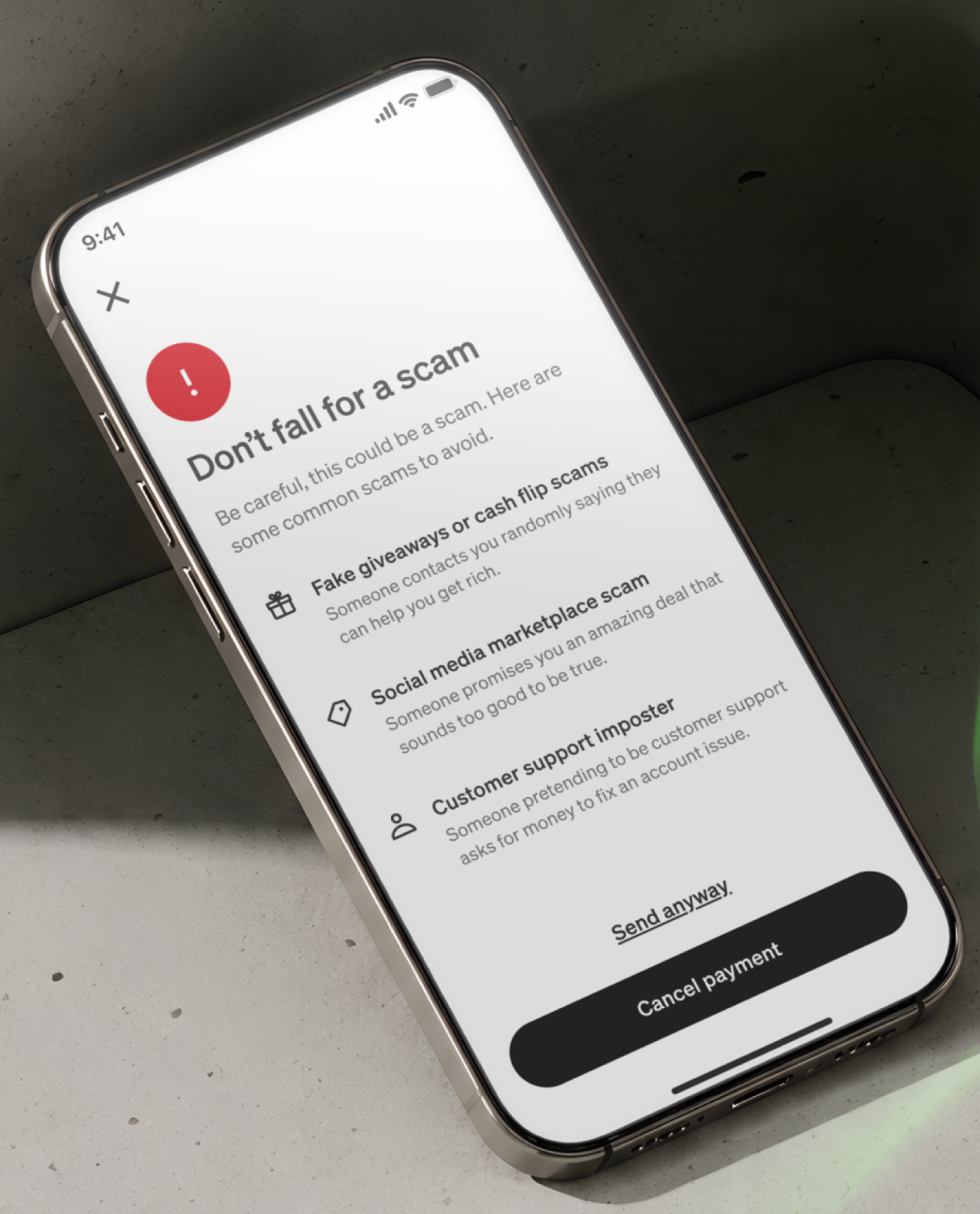
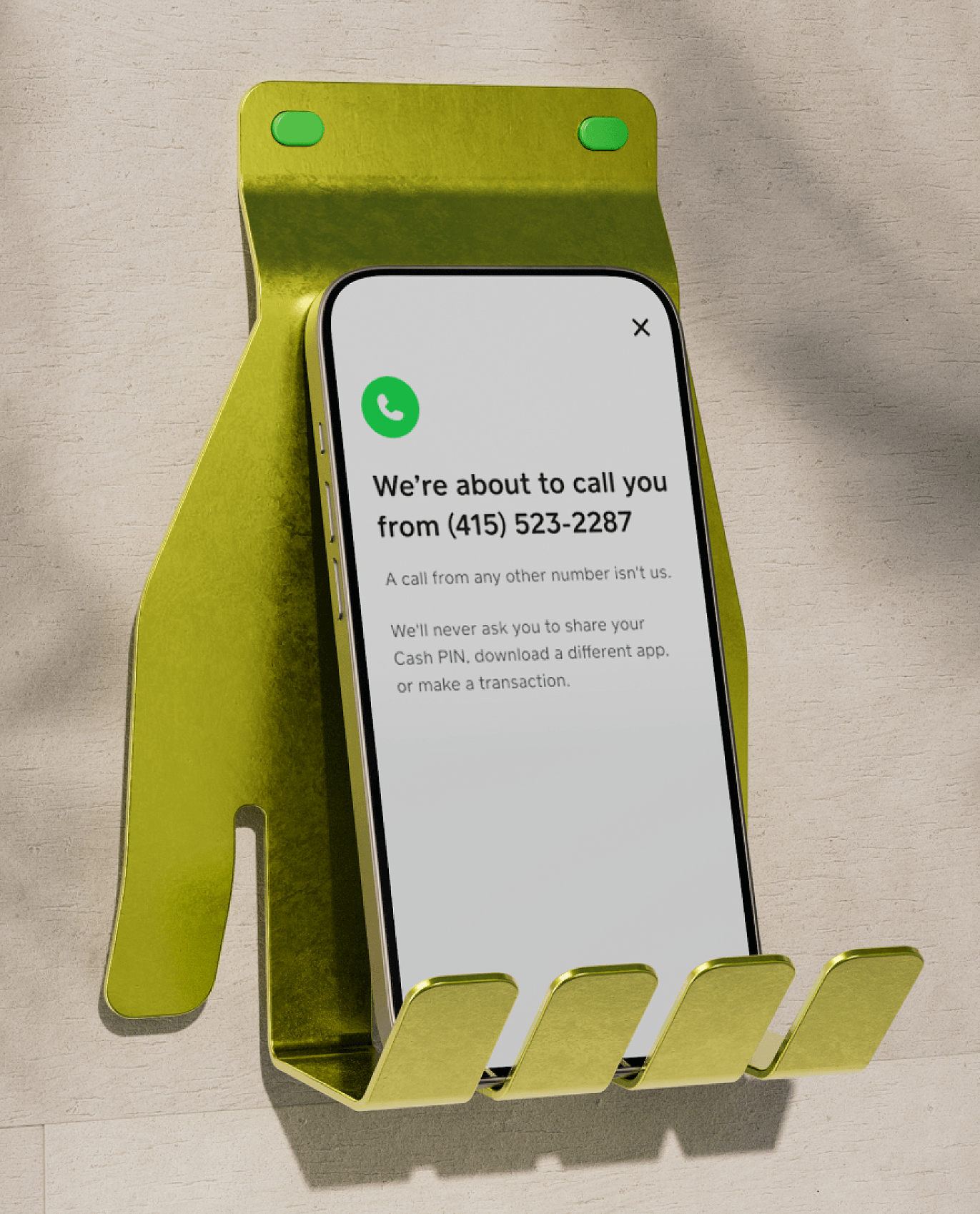
One rule cuts through all four: no legitimate company, bank, or government agency will ever ask for your PIN, password, or sign-in code over the phone, text, or email. If someone asks for those, it's not who they say they are. Some payment apps now flag this in real time — Cash App, for example, sends a warning before you confirm a payment to a flagged account, giving you the chance to cancel before the money moves.
Scam texts, emails, and fake sites
Scam messages designed to trick you into sharing your information — sometimes called phishing — work because they mimic the exact format of real notifications you're used to seeing.
A text says: "Your payment of $247.50 has been sent. Tap here to cancel." It looks like something your payment app would actually send. The link takes you to a site that looks identical to the real thing, but the URL is slightly off. You enter your login, and now someone else has it.
Scam messages show up as texts, emails, and social media DMs. They often include real-looking logos, formatting, and even your name. What gives them away isn't always obvious at first glance, but there are consistent tells:
- The sender's actual email address or phone number doesn't match the company's official contact info
- The URL in the link has extra words, misspellings, or an unfamiliar domain
- The message creates urgency: "respond within 1 hour" or "your account will be suspended"
- It asks you to share information you'd normally enter only inside the app itself
When in doubt, don't tap the link. Open the app directly or go to the company's website by typing the address yourself.
Romance and relationship scams
Romance scams rely on the oldest mechanism in the book: trust, built slowly, then leveraged in a manufactured crisis.
The pattern usually looks like this: someone connects with you on a dating app, social media, or even a gaming platform. Conversations move off the platform early. Over days or weeks, the relationship feels genuine. Then a crisis appears. A medical emergency. A travel problem. A short-term cash need with a promise to pay it back. The ask starts small, maybe $50 or $100, then escalates.
The FTC reported that consumers lost $298 million to romance scams in 2025. What makes these effective isn't carelessness. It's that the emotional investment is real, even when the person behind it isn't. During a stretch when income is tight or life feels uncertain, a new connection that provides emotional stability can feel like something worth holding onto.
Some concrete checks:
- If someone you've never met in person asks for money, that's the mechanism at work
- Run a reverse image search on their profile photo. Scammers often reuse images from other accounts
- Suggest a video call. Someone who repeatedly avoids showing their face is a red flag
- If they tell you not to mention them to friends or family, that's isolation by design
Prize, giveaway, and money flip scams
These all share the same core mechanism: guaranteed money in exchange for a small upfront cost.
Fake giveaways show up on social media, often impersonating real brands or influencers. "You've been selected to receive $500. Send $20 to cover processing." Legitimate giveaways don't charge processing fees.
Money flips promise to multiply your cash. "Send me $100 and I'll flip it to $1,000." This pitch runs heavily on social media, sometimes using fake screenshots of payment confirmations as "proof." There's no investment strategy behind it. It's just someone taking your money.
Prize and lottery notifications arrive by text, email, or DM claiming you've won something you never entered. The catch is always the same: pay a fee, provide your bank details, or share personal information to "claim" your prize.
When you're in a slow income week, the promise of a quick win hits a real desire. Scammers know this. The timing of these messages isn't random. If something promises guaranteed returns or free money, that's the mechanism. Money doesn't multiply on request, and real prizes don't cost anything to claim.
Rental and deposit scams
In competitive rental markets, pressure to put down a deposit fast is completely normal, which is exactly why scammers use it.
The setup: a listing appears on a rental site at a price that's slightly below market. The photos look professional because they're often copied from a real listing. The "landlord" is responsive and friendly. They push for a deposit before you can tour the property, usually with a story: "I'm out of town, but I can mail you the keys" or "three other people are interested, so I need a decision today."
Once the deposit is sent, the listing disappears and the "landlord" stops responding. For someone whose housing budget is already tight, losing a deposit isn't just frustrating. It can mean scrambling for the next month's plan entirely.
How to verify before you pay:
- Search the listing photos using a reverse image search. Scammers reuse photos from legitimate listings
- Confirm the person you're talking to actually owns or manages the property. County assessor records are usually free to search online
- Never pay a deposit without physically seeing the space, or at minimum having a live video walkthrough with someone who can show you the keys and the interior
- Check the BBB Scam Tracker if a deal feels too convenient
Accidental payment and overpayment scams
Someone sends you money you didn't expect, then messages you saying it was an accident and asks you to send it back. It seems straightforward, but the original payment was often made with stolen funds or a compromised account. If you send "their" money back as a new payment, you lose that money when the original transaction gets reversed.
The overpayment version works the same way with goods or services: a buyer sends more than the agreed price and asks you to refund the difference. The initial payment gets reversed, and you're out whatever you sent back.
If an unexpected payment shows up, the instinct to deal with it quickly is natural. But the right move is to wait.
- If someone says they sent you money by mistake, tell them to cancel it from their end. You don't need to send a new payment to fix someone else's error
- You can block payment requests from people you don't know
- If you need to return money you received, use the option to issue a refund on the original transaction instead of sending a new payment
Investment and cryptocurrency scams
Investment scams were the number one fraud category by dollar lost in 2025, according to the FTC, with reported losses exceeding $7.9 billion.
The most common version works like this: someone you've connected with online, sometimes through a dating app, sometimes through social media, starts talking about an investment platform that's generating impressive returns. They walk you through it. You create an account. You invest a small amount. Your balance grows. The dashboard looks real, the returns look real, and you invest more.
The platform is fake. The returns are fabricated numbers on a screen. When you try to withdraw, you're told there's a fee, a tax, or a waiting period. Then the platform disappears.
This mechanism works because the early returns look real — a growing balance, a working dashboard, numbers that match what you were told to expect. When you're looking for ways to grow money beyond your regular income, promises of high returns with low risk hit a genuine need.
Two things that legitimate investments always have: they're registered with the SEC, and they never guarantee specific returns. You can verify any investment platform at investor.gov.
Online marketplace and shopping scams
If you buy or sell on online marketplaces, the most common scam is simple: a seller offers an item at a price that looks like a deal, then asks you to pay outside the platform.
That move is the mechanism. Every major marketplace has built-in buyer protection. When a seller asks you to send money through a direct transfer, a wire, or a gift card "to avoid fees," they're really asking you to give up your ability to dispute the transaction if the item never arrives.
This shows up with high-demand items: electronics, concert tickets, limited-edition goods, event passes. The listing looks legitimate. The seller communicates quickly and professionally. But the moment the payment leaves the platform, the protection goes with it.
What to watch for:
- Any request to pay outside the marketplace's checkout system
- Prices that are significantly below market for popular items
- Sellers who push you to complete the transaction quickly
- Accounts with no history, no reviews, or stock photos
If you can only buy it by stepping outside the platform's process, that's worth pausing on.
How to tell if something is a scam
You don't need to memorize every scam type. You need to recognize the three mechanisms: urgency, authority, and isolation.
Before you respond to any message about money, check three things:
Is there a deadline you didn't create? Real institutions give you time. Scammers manufacture a countdown. If someone says you need to act within the hour or lose access to your account, that's urgency, and it's almost always manufactured.
Are you talking to who you think you're talking to? Verify through a separate channel. If you get a text from your bank, don't call the number in the text. Look up the bank's number independently and call that instead. If a friend asks you for money over DM, call them.
Is someone telling you not to check with anyone else? That's isolation. Any legitimate request can survive a second opinion. If someone says "don't tell anyone about this," that's the mechanism talking.
These three checks work across every scam type listed in this article and the ones that haven't been invented yet. For a deeper look at recognizing scam patterns, see our guide on how to identify a scam.
What to do if you've been scammed
If you've sent money or shared personal information with someone who turned out to be a scammer, here's what to do right away.
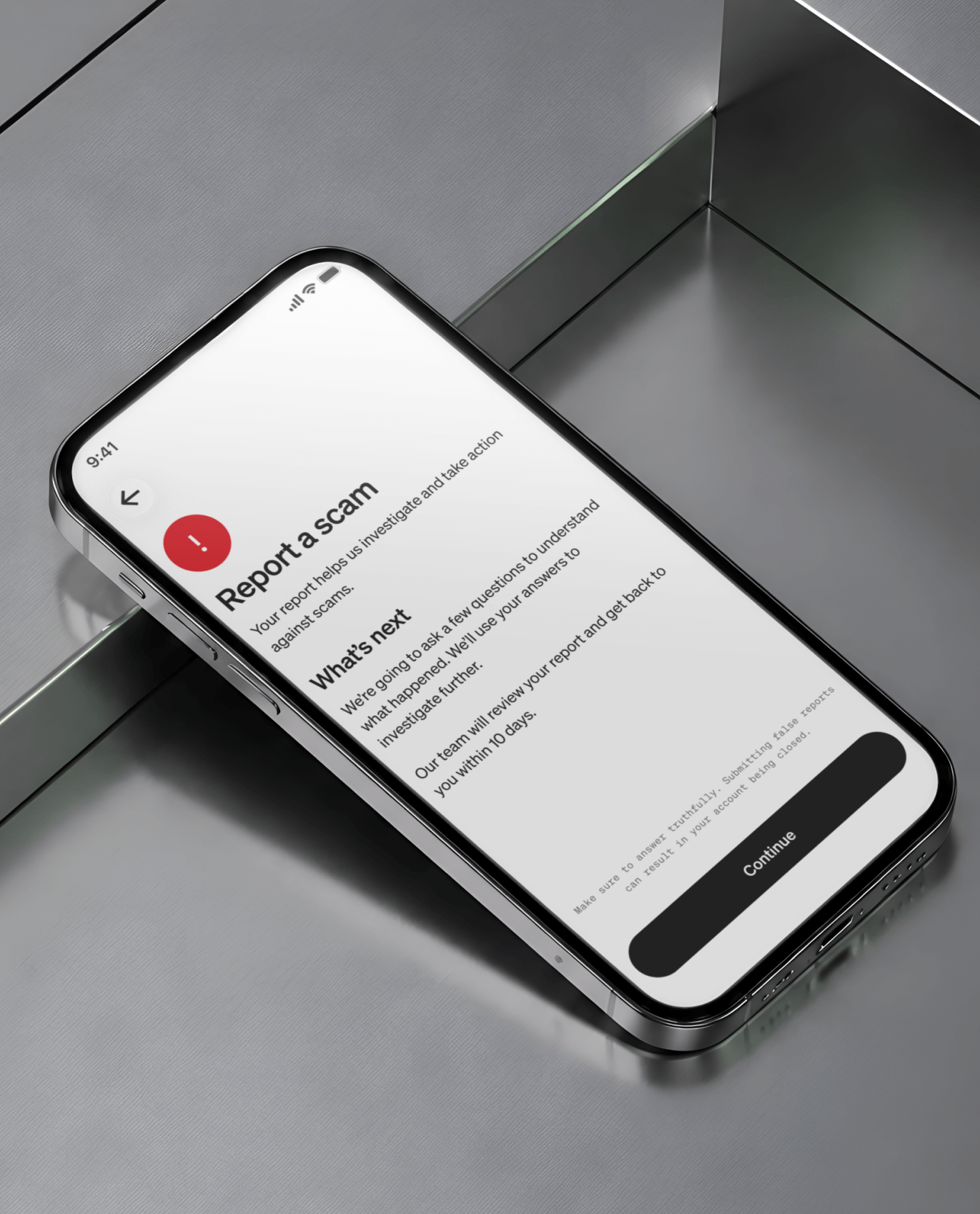
- Contact your financial institution. The sooner you report the transaction, the better the chance of recovering funds or preventing further unauthorized activity. If it happened on Cash App, you can report it directly through the app. Go to your activity feed, select the payment, and tap "Report an issue" to start a report.
- Report to the FTC. File a report at reportfraud.ftc.gov. This doesn't recover your money directly, but it feeds the database that law enforcement uses to track and shut down scam operations.
- File a local police report. Some financial institutions require a police report before they'll investigate a fraud claim.
- Change your passwords. If you entered credentials on a fake site or shared login information, change the password for that account and any other account where you use the same password.
- Monitor your accounts. Watch for any unauthorized transactions over the following weeks.
For more detail on next steps after fraud, see what to do if you get scammed. If a scam involved someone stealing your personal identity, that's a different recovery process. Go to identitytheft.gov for step-by-step identity theft recovery. For credit monitoring and freezing your credit reports, contact Equifax, Experian, and TransUnion directly. These are free.
Scams are designed to work fast. Slowing down, even by a few minutes, is the most effective thing you can do.
Cash App's real-time scam warnings flag suspicious payments before they go through, so you can cancel before money moves. See how it works.