THE GIST OF IT
- Kids form money habits by age 7, so starting early with visible savings gives them the strongest foundation.
- Saving sticks when your kid can see the balance, has a specific goal, and watches you save alongside them.
- Physical jars work for younger kids; a real account with a visible balance works better for kids over 10.
- Let your kid pick the goal and check progress weekly to build ownership and follow-through.
- Fee-free accounts that earn interest can sustain the habit without subscription costs eating into savings.
Why saving habits form earlier than most parents think
According to Cash App's Raising Gen Alpha study, 89% of parents say their kids are already saving up for something. That number might surprise you. Your 8-year-old probably hasn't read a personal finance book. But they've been watching you tap your phone at checkout, hearing you talk about bills, and mentally tallying how many weeks of chores it takes to afford a new game.
Multiple studies on childhood development suggest that money habits begin forming as early as age 7. That's second grade. And the Raising Gen Alpha survey backs up why this matters generationally: parents who learned money management before age 13 were nearly twice as likely to start those conversations with their own kids early.
So the question isn't whether your kid is old enough to learn about saving. They're already learning from what they see. The real question is whether the saving they're doing is visible enough to teach them anything.
Parent action: Start now, even with small amounts. A dollar saved in a clear jar this week teaches more than a lecture about compound interest next year.
What actually turns a kid into a saver
Kids don't save because you explain why saving matters. They save when three things happen to be true at the same time: the money is somewhere they can see it, it's going toward something they picked, and they've watched you do the same thing with your own money.
Picture the difference between "we're putting money away for you" and your kid opening an app or looking at a jar and seeing $47 out of their $60 goal. One is a fact they're told. The other is a feedback loop they control — the number goes up, the goal gets closer, and the next impulse buy gets weighed against something real.
Most advice about teaching kids to save focuses on explaining concepts. The research points somewhere else entirely. Kids imitate behavior they observe, and they repeat actions that produce visible results. You don't need to be the teacher. You need to be the environment they learn inside of.
Parent action: Run a quick audit. Can your kid see their savings balance right now? Do they have a named goal? Have they watched you save for something recently?
Make saving visible so your kid checks the balance
Most kids are saving, but most don't have a financial tool of their own. Their savings are invisible to them — sitting in a parent's account, a birthday card envelope, or a piggy bank they stopped opening months ago.
That invisibility is the problem. A kid who can't check their balance can't feel the progress. And 41% of parents in the same study said shared financial tools would help them have more honest money conversations with their kids.
For younger kids, a clear jar works. They watch coins and bills stack up physically. Once kids hit 10 or so, a real account they can check on a phone changes the dynamic. The balance becomes something they own rather than something you describe to them.
The moment a kid checks their balance before deciding whether to spend — that's the behavior you're building toward. It doesn't happen when savings live behind a parent's login.
Parent action: Replace any hidden savings with something your kid can see. Clear jar for younger kids. A real account with a visible balance for older ones.
Give saving a goal your kid actually cares about
Saving "for the future" doesn't work for adults, and it definitely doesn't work for kids. The behavior sticks when the money is going somewhere specific — a pair of shoes, a video game, concert tickets, whatever your kid is currently obsessed with.
When your kid wants a $7 snack at the movies but they're $12 away from their savings goal, they're doing real math about tradeoffs without you saying a word. That's what a named goal does — it turns every spending decision into a lesson about opportunity cost, without requiring a lecture.
The key is letting your kid pick the goal. A parent-chosen goal ("save for college") is too abstract and too far away. A kid-chosen goal ("save $40 for new headphones") creates a timeline they can feel. Two weeks of allowance plus birthday money minus one impulse buy equals a decision framework they'll use for decades.
Sit down together and name the goal. Calculate how long it'll take based on their allowance or earnings. Then check in weekly — "How close are you?" works better than "Did you save this week?"
Parent action: Help your kid name one savings goal this week. Write it down, calculate the timeline, and check in every Sunday.
Model saving so your kid copies what they see
You can explain saving perfectly and still lose if your kid never sees you do it. Most parents have started money conversations with their kids already. But plenty still feel like someone else — a school, an app, a YouTube channel — would do a better job teaching.
The data tells a different story. Parents who learned money management early were nearly twice as likely to teach their own kids early, according to the same survey. What transfers isn't expertise or a great explanation — it's the repeated, visible behavior. A parent who says "I'm saving $50 this month toward a new grill" and then checks their savings balance in front of their kid is doing more than any curriculum could.
The conversation doesn't need to be perfect or comprehensive — it just needs to be something your kid witnesses regularly.
You don't need to explain interest rates or break down a household budget. Name your own goal out loud. Check your balance where your kid can see. Let them hear you say "I'm going to skip that purchase because I'm saving for something."
Parent action: Name your own savings goal out loud this week. Check your savings balance where your kid can see you doing it.
How to adjust saving lessons by age
Visibility, a goal, and modeling work at every age. What changes is the tool and how much autonomy your kid has over it.
Young kids: piggy banks, clear jars, and short-term goals
Keep it physical. A clear jar lets a young kid see every coin and bill they add. Set goals under $20 so they reach the finish line in weeks, not months. A 6-year-old saving for a $15 toy learns more from hitting that goal than from a savings balance they can't touch.
Save alongside them. Drop your own coins in a jar on the counter. When they ask what you're saving for, tell them. At this age, they're copying you more than listening to you.
Parent action: Set up a clear jar and help your kid pick a goal under $20.
Tweens: a real account they can check
Somewhere around 10, physical money starts feeling like a toy. A kid this age is ready for a real account with a visible balance they check on a device. Sit down together and split their allowance: some to spend, some to save.
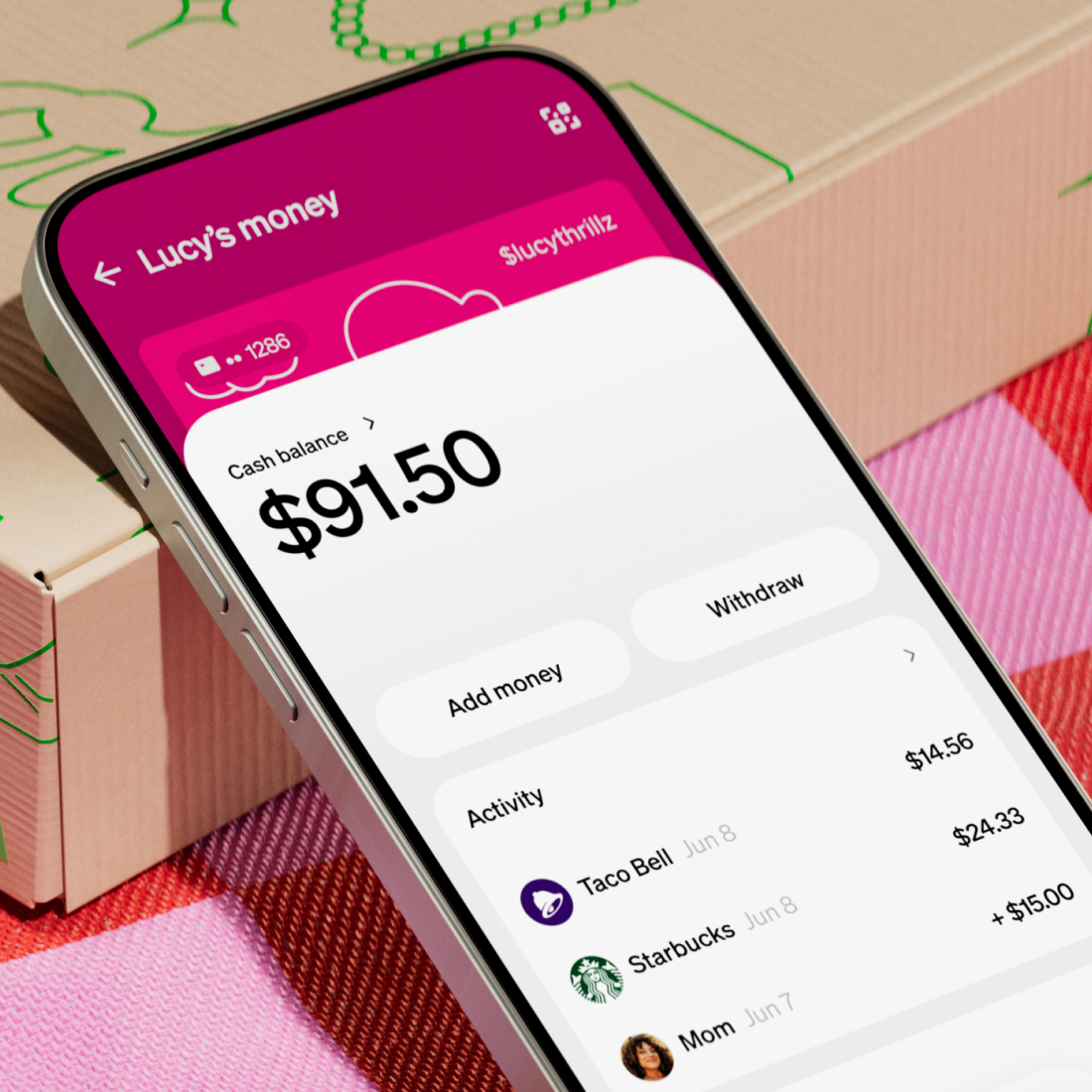
The Consumer Financial Protection Bureau's Money as You Grow guide recommends age-appropriate money milestones that match this transition. Cash App offers managed accounts for kids ages 6 to 121 with no hidden monthly fees, parental controls, and a savings balance that earns interest2 through Cash App's bank partner.
Parent action: Open a real account your kid can check. Split allowance into spend and save together.
Teens: earning, budgeting, and their own savings tools
By 14 or 15, most teens are earning something — from part-time jobs, reselling, tutoring, or digital work. Saving shifts from allowance-based to income-based, and goals get bigger.
A teen earning their own money needs their own savings tool with a visible balance and a named goal. Your role at this point is advisor, not manager. Let them make decisions. Check in rather than direct. Cash App offers sponsored accounts for teens ages 13 to 173 with no hidden monthly fees, interest on savings, and parental visibility into balances and transactions.
Parent action: Help your teen set a savings goal tied to their own earnings and check in monthly.
Start building the habit today
Your kid is already saving for something. The question is whether they can see it, whether it's going toward a goal they picked, and whether they've watched you do the same. Those three things — visibility, ownership, and modeling — turn occasional saving into a habit that sticks.
Ready to give your kid a real savings tool? Cash App offers accounts for kids and teens with no hidden monthly fees, interest on savings, and parental controls that let you stay involved without taking over.